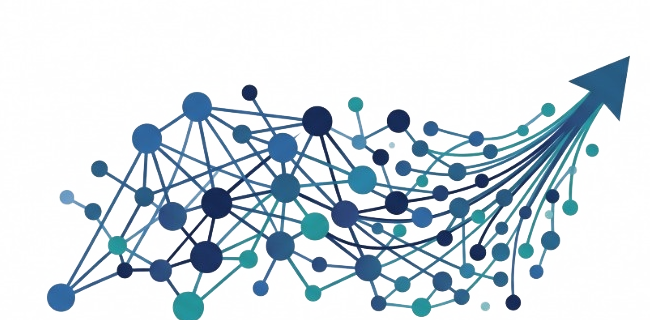
The Fallacy of Monolithic AI in Financial Markets
Single Models Hallucinate.
Swarms Converge.
Single AI models fail in volatile financial markets. When a single model tries to ingest data, evaluate risk, and place orders within a single prompt loop, early reasoning errors compound into catastrophic trade executions.
The Latency & Reasoning Bottleneck
Burdening a single model with order book depth, volatility pricing, and trade execution spikes inference latency past 800ms. In fast-moving markets, that delay erodes your edge and turns profitable signals into adverse selection.
Adversarial Agent Consensus
Starling Quantitative separates trading into specialized roles. Lightweight agents independently identify pricing dislocations, while an adversarial risk group actively tries to invalidate every trade proposal before any capital is committed.
Distributed Multi-Tier Cloud Topology
Separation of Concerns.
From Raw Signal to Direct Market Access.
Our trading architecture isolates strategy ideation, risk management, and order routing into three distinct operational layers. No individual model has direct access to deploy capital without independent quorum verification.
Real-Time Data Ingestion
Dedicated micro-agents stream order book depth, cross-venue pricing gaps, and liquidity changes across exchange APIs in continuous sub-second loops.
Multi-Agent Hypothesis Testing
When an agent detects a pricing anomaly, independent counter-agents immediately challenge the thesis—evaluating fee drag, book depth, and adverse selection before voting.
Deterministic Risk Controls
Quorum leader nodes enforce hard risk limits—maximum drawdown ceilings, capital exposure caps, and inventory balancing—before dispatching orders to exchange matching engines.
The 4-Step Verification Quorum
Distributed Consensus Meets
Hard Risk Controls.
How a trade idea travels from market anomaly to verified execution in milliseconds—without emotional bias or human latency.
Opportunity Discovery
Ingestion agents scan order books to identify cross-venue spreads, mispriced event probabilities, and structural arbitrage across venue pairs.
Adversarial Stress-Testing
Independent audit agents evaluate the candidate trade against historical edge, available liquidity depth, and worst-case taker fee slippage.
Multi-Node Risk Quorum
Execution requires a two-thirds majority across independent risk nodes. If capital exposure or drawdown thresholds are exceeded, the trade is rejected immediately.
Low-Latency Order Routing
Approved trades are routed directly to exchange order books via low-latency connectors. Position ledgers and hedge states update simultaneously.
Real-Time Swarm Arbitration Console
Inspect Swarm Consensus
In Dynamic Real Time.
See how our multi-agent quorum responds to volatility in real time. Simulate a market dislocation to observe how agents challenge proposals and protect capital.
Low-Level Infrastructure Primitives
Engineered for Sub-Millisecond
Deterministic Execution.
Engineered for high-throughput, low-latency execution with zero garbage collection pauses and deterministic order routing.
Direct Inquiries & Collaboration
Connect with the Team.
Starling Quantitative combines multi-agent AI, probabilistic forecasting, and automated execution to capture persistent alpha across event and prediction markets.
Greg Meade
Founder & Quantitative Systems Architect • Autonomous Trading Systems • Cloud Infrastructure
Let's discuss market making, API integration, and multi-agent trading systems.
We are actively collaborating with prediction market platforms, quantitative trading desks, and liquidity providers. Whether you are exploring strategic partnerships or API access, direct inquiries are welcome.